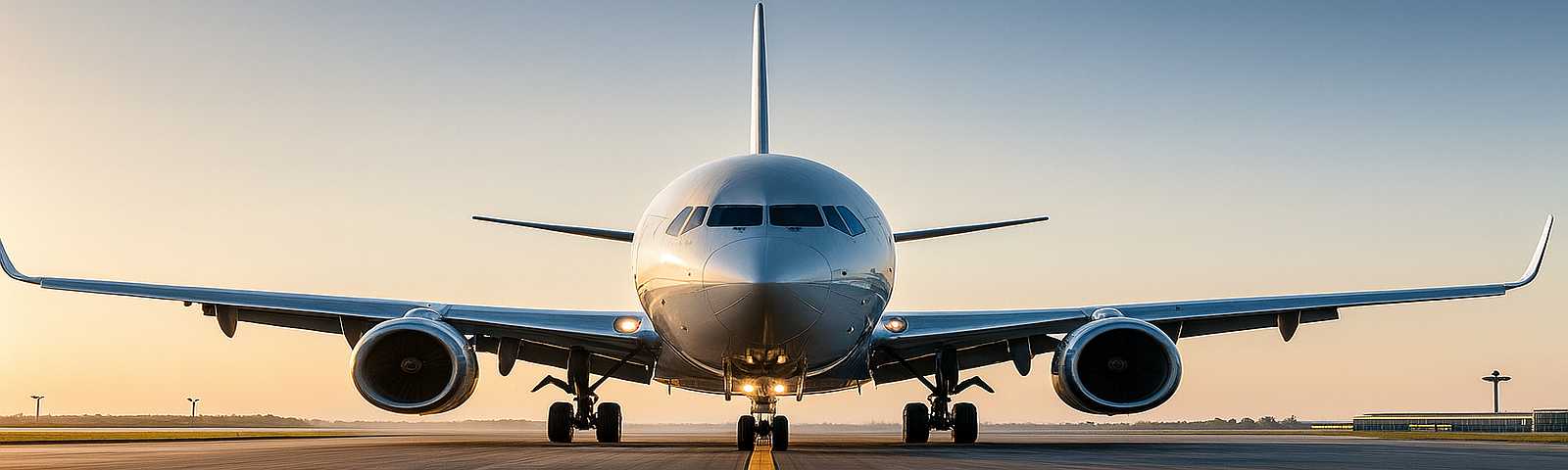
ATPL in the USA – costs, prerequisites & Timeline
Table of contents
- ATPL in the USA – Overview
- Costs of ATPL training in the USA
- Requirements for ATPL training in the USA
- Training course and special features in the USA
- Conversion of the US license into a European license
- FAQ – Frequent Questions
ATPL in the USA – An Overview
ATPL education in the US has been one of the most popular ways to start professional pilot training for many years. Many aspiring pilots consciously choose to go through American flight schools, as training there is often considerably cheaper, offers a high level of training intensity and takes place in a globally recognized aviation environment.
The United States has one of the largest and most regulated aviation systems in the world – a great advantage for anyone who wants to gain as much practical experience as possible. At the same time, the training convinces with good availability of flight hours, modern fleets and a strong focus on efficient, practical training.
If you are thinking about completing an ATPL training in the USA, you will find a compact overview of costs, requirements, training process and the subsequent license conversion in Europe. Although Pilotenausbildung1.de itself does not offer training, we want to help you make informed decisions and get a first impression of what awaits you on the way to your airline career. The following post is intended to motivate, inform and give you a clear overview of the most important points that are crucial for your planning.
Costs of ATPL training in the USA
The cost of an ATPL education in the U.S. varies greatly depending on flight school, location, aircraft type and personal learning progress. Basically, however, the complete education in the US is often significantly cheaper than in Europe, which is one of the main reasons for the popularity of American training programs.
In many cases, the total cost ranges from $45,000 to $80,000 for the complete journey from zero experience to the Commercial Pilot License (CPL) with Instrument Rating (IR) and the required theory exams for the ATPL. Especially locations in Florida, Arizona or California benefit from stable weather conditions that allow flying days almost all year round. This reduces training interruptions and increases the efficiency of training.
However, in addition to the basic costs, there are other factors that should be taken into account. This includes, for example, accommodation, living expenses, visa fees, examination and medical fees, as well as any additional flight hours that go beyond the minimum requirements. Also the so-called timebuilding – the collection of flight hours – is an essential cost point and is usually calculated separately.
However, many flight schools offer structured packages that already integrate timebuilding.
In addition, aspiring pilots should bear in mind that after training in the USA, additional costs may be incurred in Europe, for example for the license conversion to an EASA system. Despite these additional costs, ATPL training in the US is the most economically attractive option for many and offers a very good balance between cost, training quality and flight experience.
Requirements for ATPL training in the USA
Anyone who wants to start an ATPL training in the USA must meet certain requirements, which are both legal and organizational in nature. One of the most important requirements is the M-1 visa required for foreign student pilots, which requires prior registration in the TSA security system.
Personal data, security checks and biometric information must be provided before practical flight training can begin. In addition, aspiring pilots need a medical certificate, in most cases an FAA Class 1 Medical, which is issued to certified doctors in the USA. Linguistic requirements also play a role: Good knowledge of English is mandatory, as both teaching and radio traffic take place exclusively in English. The FAA requires demonstrable language proficiency in accordance with ICAO standards.
In terms of content, new flight students do not have to bring any previous experience, as many American flight schools offer programs that start from scratch and build step by step. Nevertheless, interested parties should have a good willingness to learn, technical understanding and a stable health condition, as the training is intensive and demanding.
In addition, there are age requirements: For the start of the private pilot license (PPL) a minimum age of 17 years is sufficient, the minimum age for the CPL is 18 years.
The ATPL is only issued fully valid at the age of 23, but all examinations can be taken beforehand and conducted as a "frozen ATPL". If you meet these requirements, you can start a well-founded, structured and internationally appreciated pilot training in the USA.
Training course and special features in the USA
The training process for an ATPL career in the USA follows a clearly structured order, which is designed for efficiency and practical orientation. Most flight students start with the private pilot license (PPL), which is the entry point into basic aviation training. This is followed by the Instrument Rating (IR), which enables flight by instrument and is a key component of professional pilot training. Subsequently, the Commercial Pilot License (CPL) is acquired, which forms the basis for professional assignments as a pilot.
A special feature in the USA is the intensive timebuilding, which is a great advantage for many European flight students. During this section, pilots gain valuable flight experience on their own or in conjunction with other student pilots. Due to the favorable flight hour prices and the many flyable days, this part of the training can be completed very efficiently. ATPL theoretical training is often completed in parallel or after the practical sections. Many American flight schools cooperate with European providers, so that the ATPL theory can already be taken according to EASA standards if the later route to Europe is planned.
In addition, the American aviation system is strongly designed for standardized procedures, which is particularly valuable for aspiring pilots. Large airspaces, a lot of traffic and diverse weather conditions offer realistic training conditions that optimally prepare for later airline operations. Overall, US pilot training is characterised by high flexibility, fast training paths and a practice-oriented environment that is appreciated worldwide.
Conversion of the US license into a European license (EASA)
Many pilots completing their training in the USA are subsequently planning to convert their license into a European EASA system. This process is possible, but it involves effort and costs. In principle, the American CPL and IR license is recognized as a solid basis, but additional exams and practical checks must be taken. The most important part is the EASA-ATPL theory, which must be completed in Europe or via certified distance courses.
After successful theory, pilots have to go through a so-called “Skill Test” procedure, in which the European standards are practically checked. In addition, a “conversion training” may be necessary, such as an instrument flight training according to EASA procedures, since US and EU procedures differ in some points. The Medical must also be adapted to European standards, which is why an EASA Class 1 Medical is required. Language examinations and sometimes radio certificates must also be renewed, as the FAA versions are not automatically transmitted.
Despite these efforts, many pilots deliberately choose the route via the USA, as the total cost including conversion is often lower than a full EASA training in Europe. In addition, the US education offers an excellent aviation foundation, which is appreciated by many airlines worldwide.
FAQ – Frequent Questions
How long does ATPL training take in the US?
Depending on the flight school and weather conditions, the complete training takes 12 to 24 months.
Is US pilot training cheaper than in Europe?
In most cases, yes – the total costs are significantly lower than for European flight schools.
What visas do I need for education?
For most flight students, the M-1 student visa is required.
Do I need to know English?
Yes, good knowledge of English is absolutely necessary because all teaching takes place in English.
Can I work with a US license in Europe?
Yes, but only after a successful conversion into an EASA license.
How much flight experience do you gain in the USA?
Due to intensive timebuilding, many students get more than 200 flight hours.
Do I need an FAA Medical?
Yes, usually an FAA Class 1 Medical.
Is the weather in the USA more suitable for training?
Many regions, such as Florida or Arizona, have very stable weather conditions.
Can I start from scratch?
Yes, many programs start without any previous experience.
How does the ATPL theory work for EASA later?
The theory can be completed as a distance course or in a European flight school.