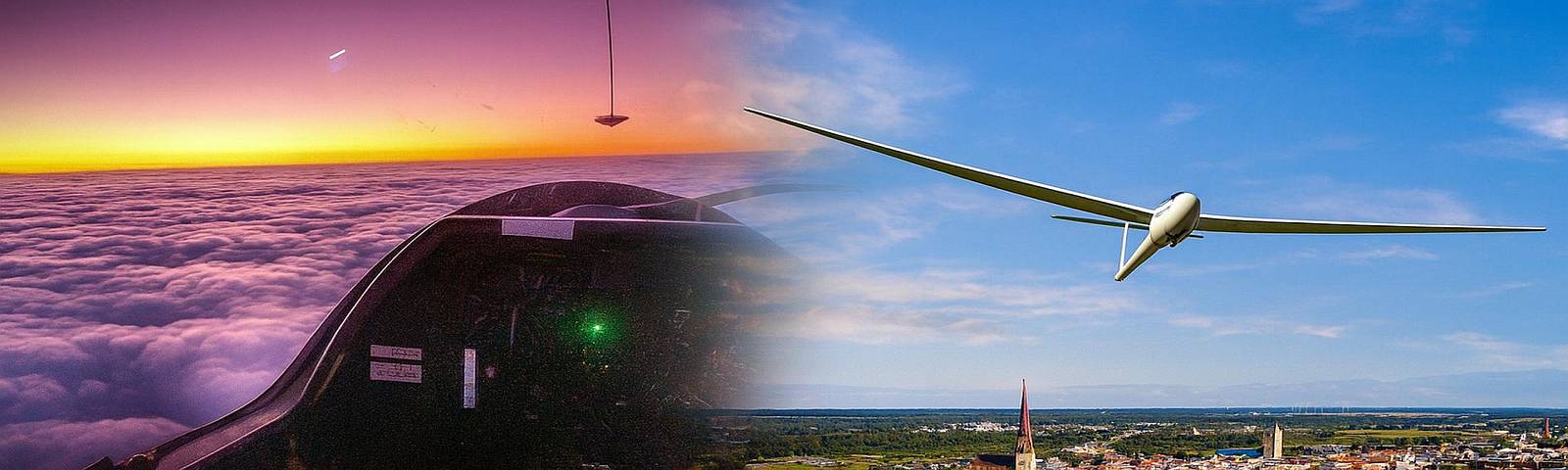
Alpine gliding – fascination in the mountains
The Alpine gliding is one of the most demanding and at the same time most spectacular disciplines of gliding. High mountains, strong winds, rapid weather changes and breathtaking landscapes make flying in the Alps a special experience – but also a flying challenge.
In the Alpine gliding, pilots use special upwind forms such as slope upwind, thermals and, above all, wave upwinds, which often enable large flight altitudes on the Alps. For this, in-depth knowledge of meteorology and mountain weather is essential, because foehn conditions, valley wind systems and lee waves can change quickly. Precise route planning and the correct assessment of landing opportunities in the mountains play a central role for safety.
In addition, Alpine gliding requires a high degree of flying experience and discipline. Take-off and landing sites are often located in challenging terrain, which is why exact flying and good energy management are crucial. Many pilots complete special Alpine gliding courses in order to prepare for these special conditions and to enjoy the fascinating world of high mountain gliding safely.
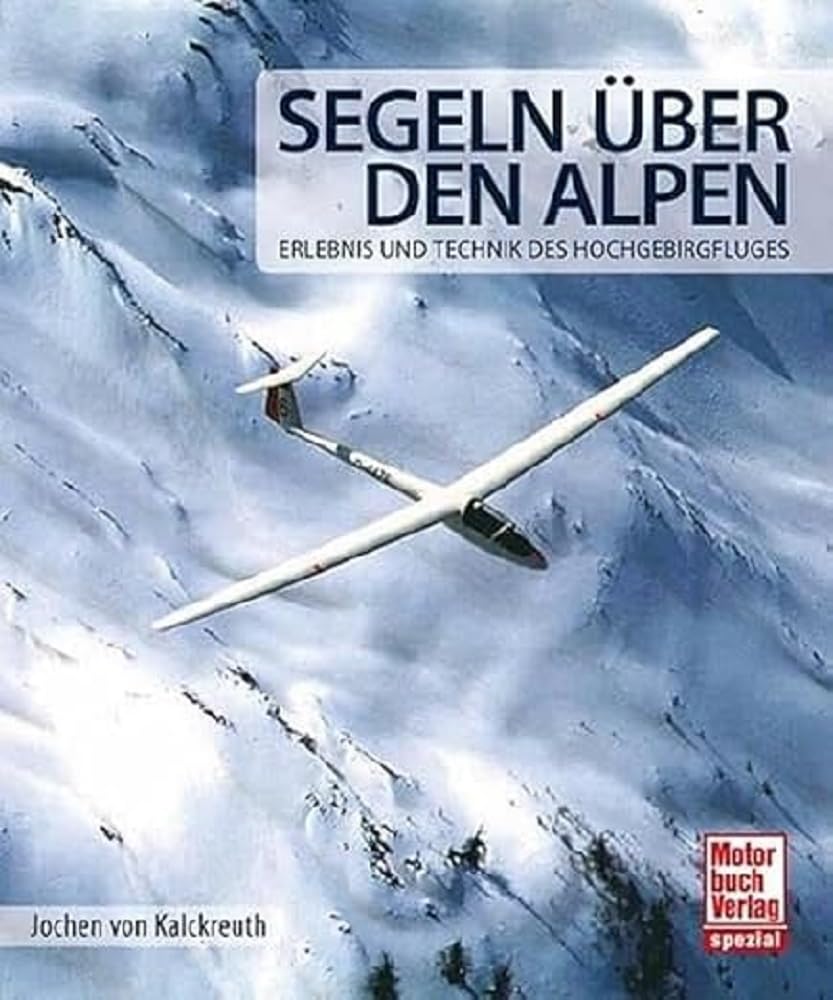
Recommended book*
Special conditions in the mountains
Gliding in the Alps is clearly different from flat-country flight. In addition to experience and precise flight tactics, knowledge of the local wind systems as well as good preparation are required.
Typical requirements:
-
Safe handling of slope and wave winds
-
Precise route planning along valleys and passes
-
High attention to terrain distances
-
Knowledge of challenging outdoor landing opportunities
Alpine gliding vs. Flatland gliding
| Character | Alpine gliding | Flatland gliding |
|---|---|---|
| Wind types | Hang, wave, strong thermals | Thermics, weaker waves |
| Flight tactics | Use terrain-related slopes | Thermic circles, cloud streets |
| Risks | Terrain, lee turbulence, rapid weather changes | External landings, low thermal |
| Speed | High cruising speeds due to scheduled flights | Mostly moderate |
| Prospects | Mountain panoramas, altitudes above 4000 m | Wide levels, usually lower base |
Weather in the Alps
-
Slope wind: Creates when wind is pushed up on mountain slopes – ideal for fast advances along the ridges.
-
Alpine thermals: Strong thermal winds due to intense solar radiation on the rock.
-
Föhn: Strong, dry fall wind. Can produce perfect wave winds, but also extreme turbulence.
-
Wave formation: Behind mountain combs, stable, laminar winds often form far into the stratosphere.
Navigation and flight tactics
In the Alps, the flight rarely follows straight lines. Pilots use “energy bands” such as slopes, ridges or wave lines.
Typical tactics
-
Crest close flightsAlong the mountain ridge in the uphill wind
-
valley crossingsOptimized timing and sufficient height
-
Wave flightsQuiet climbing in laminar winds
-
Hedging landing optionsEach section of the route is planned so that a downhill aerodrome remains accessible
Equipment
In the Alpine gliding, the equipment is often more extensive than in the flatlands:
-
Oxygen system For flights over 3000 m
-
GPS-based navigation system / Flarm
-
Warm clothes & Emergency equipment
-
Sun and UV protection due to intense radiation at altitude
Safety in Alpine gliding
The first rule is: Respect for the mountains.
Important safety principles:
-
Sufficient distance from the ground
-
Early decision in the event of weather deterioration
-
Knowledge of lee, rotors and drop winches
-
Never fly into the “unlandable”
-
Good preparation, briefing and tracking
Alpine gliding in Europe
Alpine gliding is particularly popular in many parts of Europe – and many countries offer excellent mountain landscapes, flight conditions and airfields for ambitious gliders. Among the most famous regions are:
- Germany — with the Alpine foothills and alpine peripheries as an introduction to alpine gliding.
- Austria — Core region for slope, wave and thermal flights in the high mountains.
- Switzerland - spectacular mountain scenery and challenging flight conditions in the Alps.
- France - Alpine regions and Pyrenees provide ideal conditions for gliding in the mountains.
- Italy — With Alps and Apennines a varied selection of mountainous regions.