Powered flight is one of the most exciting areas in private aviation, offering pilots the opportunity to travel flexibly, safely and independently with single-engine aircraft. Aspiring flight students will find a large number of flight schools in Germany that offer different powered flight licenses – including the Ultralight License (SPL), the Light Aircraft Pilot License LAPL(A) and the classic private pilot licence PPL(A). The aim is to provide interested parties with a neutral orientation so that they can select the appropriate license and get a clear overview of costs, requirements and typical training paths.
While the SPL enables a particularly cost-effective entry into powered flight with light ultralight aircraft, the LAPL(A) is aimed at pilots who want a wider range of operations within Europe. The PPL(A) is the most comprehensive and internationally recognized private pilot license, allowing not only longer ranges and more diverse aircraft classes, but also additional ratings such as night flight (NVFR) or instrument flight (IR).
Each license is described with its costs, prerequisites and typical training content, so that interested parties can quickly identify which option best suits their personal goals and opportunities.
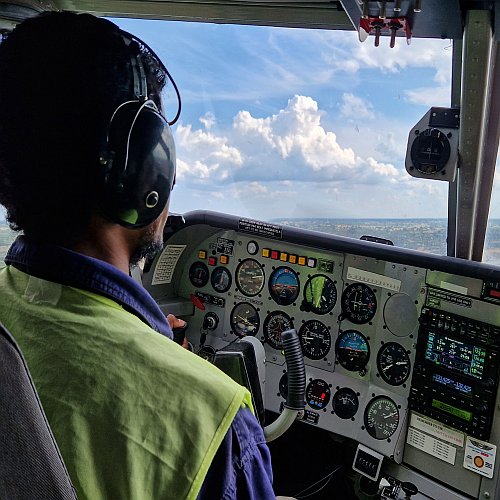
Table of comparisons of licences
| Licence | Typical flight hours | Duration of training | Costs | Coverage |
|---|---|---|---|---|
| SPL | At least 30 hours | 2–6 months | 4.500–8.000 € | Germany |
| LAPL(A) | At least 30 hours | 3–9 months | 6.000–12.000 € | EASA-wide |
| PPL(A) | Not less than 45 hours | 6–12 months | 10.000–18.000 € | Worldwide (ICAO) |
PPL(A) – Private Pilot License
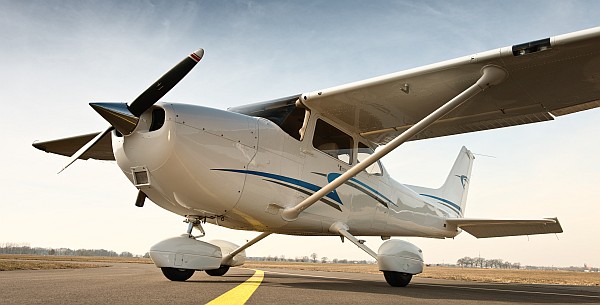
The PPL(A) is an internationally recognized private pilot license that allows single-engine aircraft to be flown for non-commercial purposes. It is aimed at flight enthusiasts who want to travel independently or practice flying as a hobby. The training includes theoretical instruction in subjects such as navigation, meteorology and aviation law, as well as at least 45 hours of flight time, including solo flights and overland navigation. After passing the theoretical and practical examination, you will receive the license with which you can drive aircraft of the corresponding class worldwide. Additional permissions can be added later.
SPL – Ultralight License
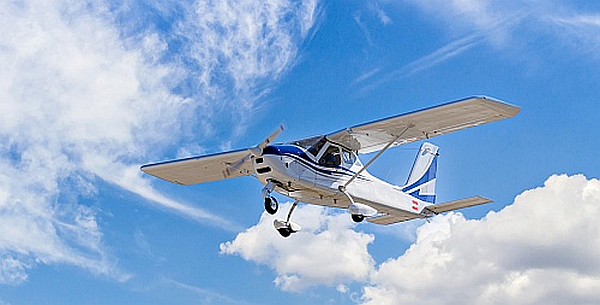
Ultralight Pilot Training (SPL) is a cheap and beginner-friendly way to powered flight. It is aimed at leisure pilots who want to fly light, agile and economical ultralight aircraft up to 600 kg. These offer low operating costs and good travel services. The training is usually carried out in small flight schools and includes circling, basic flight maneuvers, navigation, radio, emergency procedures and theoretical principles. Many appreciate the SPL because of faster learning progress and low costs. After training, pilots often use the license for scenic flights or short holidays within Germany.
LAPL(A) – Light Aircraft Pilot License
The LAPL(A) is a Europe-wide recognized license for recreational pilots and allows single-engine aircraft to fly with up to four seats and 2,000 kg take-off weight. It offers more options than the SPL, but remains cheaper and less expensive than the PPL(A). Pilots are allowed to fly and charter aircraft in all EASA countries. The training includes flight manoeuvres, navigation, radio, emergency procedures and simplified theory based on the PPL substance. With larger, more stable aircraft, the LAPL(A) is ideal for longer distances or holidays in Europe. Many flight schools train on patterns such as Cessna 172 or Diamond DA20/DA40.
PPL vs. LAPL – Differences
| Criterion | LAPL(A) | PPL(A) |
| Coverage | EASA countries | Worldwide |
| Min. Flight hours | 30 hours | 45 hours |
| Extendable later? | Limited | Many extensions (NVFR, IR, MEP ...) |
| Max aircraft weight | 2,000 kg / 4 seats | up to 5,7 tonnes depending on rating |
| Costs | 6.000–12.000 € | 10.000–18.000 € |
FAQ – Frequent Questions
1. Which license is right for me?
The choice depends on your goals, your budget and the desired area of use. For leisure flying only, the SPL is often sufficient, for Europe-wide flights the LAPL(A) and for maximum flexibility the PPL(A).
2. How long does powered flight instruction take?
Depending on the license, available time and weather conditions, the duration of training is typically between about 2 months and 1 year.
3. What general requirements do I need?
You need a minimum age (usually 16 years of age at the start of training), a valid medical certificate and basic language skills.
4. Which license is the most favorable?
As a rule, the ultralight license SPL is the most favorable, both in training and in ongoing operation.
5. What does a PPL(A) training cost approximately?
Usually, the costs are between 10,000 and 18,000 euros, depending on flight school, aircraft type and your learning progress.
6. Can I fly abroad with the SPL?
The SPL is primarily national. Flights abroad are only limited and usually possible with the prior approval of the respective aviation authority.
7. What does EASA mean for LAPL and PPL?
EASA is the European Aviation Safety Agency. LAPL(A) and PPL(A) are EASA licenses and standardized within the EASA area.
8. What is a Medical?
A medical is the aero-medical medical certificate that you need before flying solo.
9. How do I keep my license current?
You must demonstrate minimum flight hours in a certain period and, if necessary, conduct refresher flights or dual check flights.
10. Can I extend from LAPL(A) to PPL(A)?
Yes, additional flight hours and an appropriate test can be used to extend to PPL(A).
11. What theory exams await me?
Among other subjects such as air law, navigation, meteorology, human performance, engineering and operational procedures.
12. What radio license do I need?
The BZF (limited valid radio certificate) is usually required for radio communications in controlled airspace.
13. At what age can I start?
You can usually start with the education at the age of 16, the license is usually issued from the age of 17.
14. What is the practical examination procedure?
You fly with an examiner a test flight, in which standard procedures, emergency procedures and navigation are queried.
15. Can I fly with my license at night?
Only with an additional night rating (NVFR). This can be placed on an existing LAPL(A) or PPL(A).
16. Which planes can I fly with SPL?
Single-engine ultralight aeroplanes shall be used up to the permitted MTOW (e.g. up to 600 kg, depending on the current regulation.
17. Which planes can I fly with LAPL(A)?
EASA aircraft up to 2,000 kg take-off weight and a maximum of four seats, within the LAPL rating.
18. How safe is powered flight?
With good training, regular practice and careful maintenance, powered flight is very safe. Many factors are the responsibility of the pilot.
19 How many theory lessons are needed?
Depending on the license scope, roughly between 60 and 100 hours of theory lessons, partly also as an online or weekend course.
20. Can I charter aircraft after training?
Yes, many flight schools and clubs offer charter options for license holders.
21. Which insurances are relevant?
Important are holder liability, if necessary. Passenger liability and additional passenger accident insurance.
22. Is there a minimum age for the first solo flight?
As a rule, the minimum age for the first solo flight is 16.
23. How is LAPL(A) different from PPL(A)?
The PPL(A) is more extensive, globally recognized (ICAO) and offers more expansion possibilities; the LAPL(A) is limited to the EASA area.
24. Can I become a commercial pilot with these licenses?
The PPL(A) is a suitable basis for commercial pilot training. SPL and LAPL(A) are pure leisure licenses.
25. How does radio traffic work in the cockpit?
You use standardized radiotelephony methods and phraseology, which you learn in theory and radio lessons and which are relevant to exams.
26. Do I have to go through the training at once?
No, most flight schools offer flexible models. However, it makes sense to fly regularly in order to consolidate what has been learned.
27. What is a check flight?
A check flight is an instructor check flight to assess your skills and refresh them if necessary.
28. What distinguishes UL aircraft from the Echo class?
ULs are lighter, cheaper and subject to different certification and maintenance requirements than Echo-class aircraft.
29 Are there funding or funding options?
Some associations, foundations or regional programs offer grants, discounts or installment models – here targeted demand is worthwhile.
30. How do I find the right flight school?
Through specialized portals, you can compare flight schools by location, license type and cost and contact them directly.