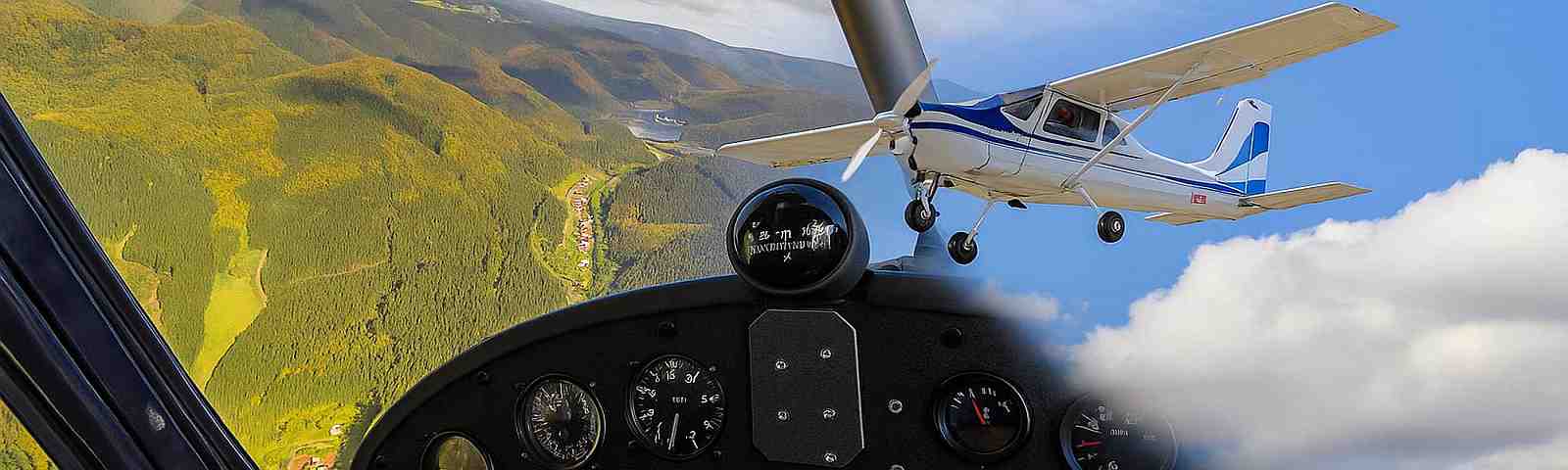
Ultralight flying – freedom above the clouds
Ultralight flying is one of the most fascinating ways to discover the world from a completely new perspective. With modern UL aircraft that are light, efficient and amazingly powerful, the dream of flying becomes tangible for many people. This is not only about moving from A to B, but rather about the feeling of boundless freedom that only a flight into the open skies can convey.
Ultralight flying is particularly exciting because it offers a unique combination of adventure, technology and nature experience. Already on the first boarding in a UL aircraft you can feel the immediate connection to the environment. The machines react sensitively and directly, which makes you feel like you are really part of the sky yourself. At the same time, technology has evolved enormously in recent years: modern avionics, efficient motors and improved safety standards make flying safer and more comfortable than ever.
In addition, the path to your own UL license is comparatively easy to achieve. Unlike other flight licenses, the requirements are manageable and training can often be flexibly adapted to professional or private commitments. Many flight schools offer individual concepts that make it possible to immerse yourself step by step in the world of aviation.
So if you dream of piloting a UL aircraft yourself, you will find a fulfilling opportunity in ultralight flight to make this dream a reality. It is a passion that not only expands horizons, but also enriches life with unforgettable moments.
Recommended book*
SPL – An Overview
| Aspects | Description |
|---|---|
| Type of licence | National Sport Pilot Licence (SPL) for aerodynamically controlled ultralight aircraft (UL, three-axle aircraft). |
| Training objective | Acquisition of skills for safely driving an ultralight aircraft in leisure and hobby sports. |
| Minimum age | 16 years for training start and solo flights, 17 years for licensing. |
| Flight hours | At least 30 hours of flight time, including at least 5 hours on solo flight. Included are cross-country flights with stopover. |
| Theoretical training | About 60-80 hours of lessons in aviation law, navigation, meteorology, engineering, human performance, behaviour in special cases and radio communications. |
| Medical certificate | Required LAPL or Class 2 standard medical certificate (depending on association/school). |
| Duration of training | An average of 4–8 months for part-time training; depending on weather, flight school and availability. |
| Cost (approximately) | Between €5,000 and €8,500, depending on flight school, aircraft type and space fees. |
| Examinations | Theoretical examination (multiple-choice) and practical examination with a UL examiner (about 60 minutes flight). |
| Rights | Driving an ultralight aeroplane visual flight (VFR). Passenger flight by separate passenger authorization and sufficient flight experience (PIC). |
| Validity & Extension | Licence indefinitely; active rating by demonstration of regular experience (e.g.) B. at least 12 h and 12 starts within 24 months. |
| Coverage | Valid throughout Germany; recognition in other countries depending on national regulations (no EASA license). |
| Typical aircraft | Breezer, C42, FK9, TL Sirius, WT9 or similar aerodynamically controlled ultralight aircraft. |
| Suitable for | Beginners, leisure pilots and flight enthusiasts who want to fly in a cost-effective and flexible manner. |