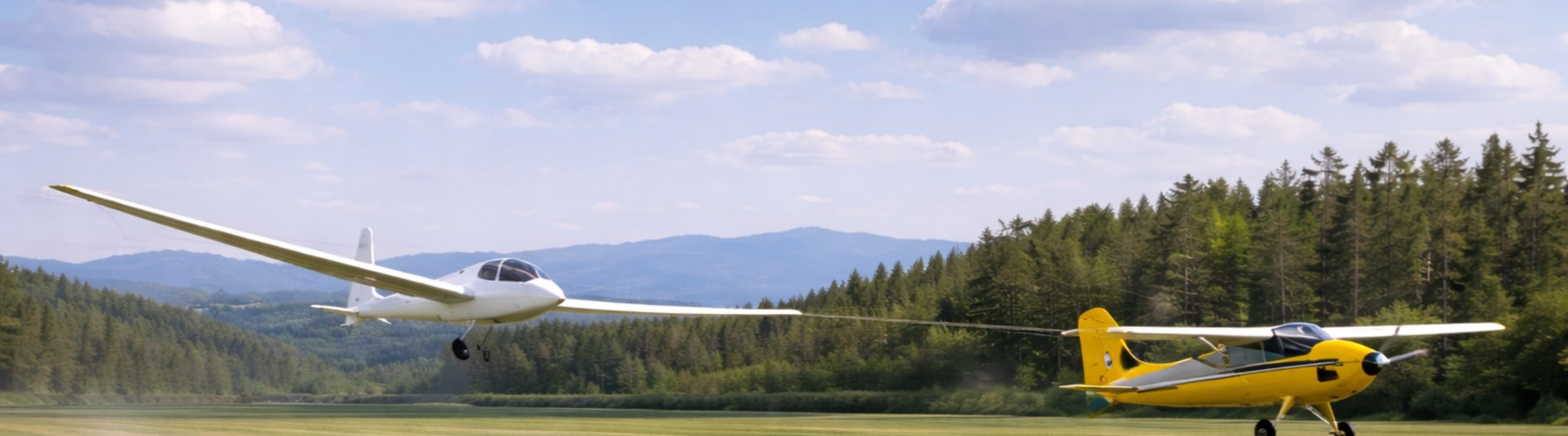
Gliding towing
The Aerotow is one of the most common and flexible starting methods in gliding. A sailplane is towed into the air with the help of a powered aircraft until it has reached a sufficient altitude to fly on independently.
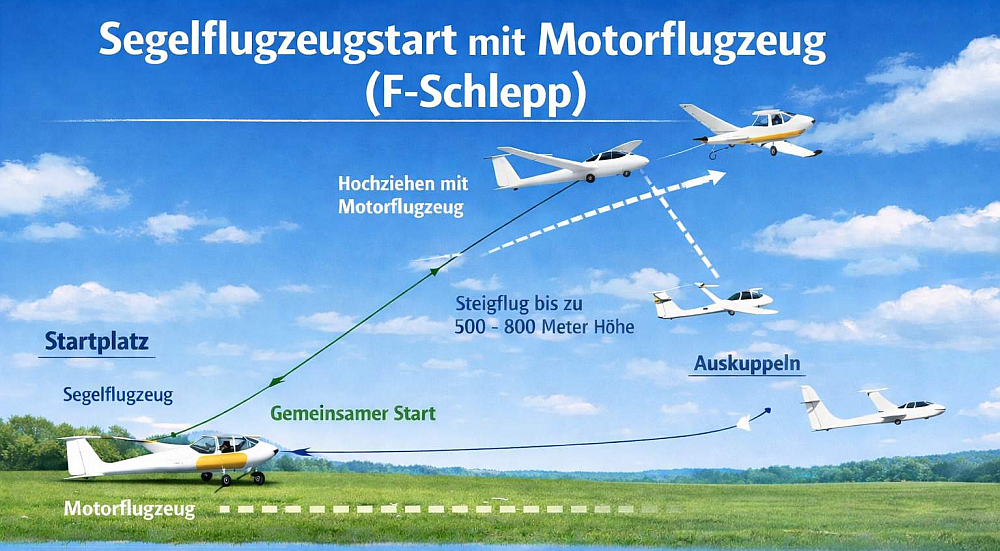
Procedure of aeroplane tow
At the beginning, the glider is connected to the towing aircraft via a tow cable of about 40-60 meters long. Both pilots give the starting consent via fixed signals – usually a clear wiggle of the rudder. As soon as the tow pilot goes full throttle, the powered aircraft begins to roll; the glider follows and usually takes off after only a few meters. Until the towing aircraft is also in the air, the glider flies in a slightly raised position to ensure stability.
During the climb, the sailplane remains in a certain position behind the towing aircraft, the so-called ‘Tug box’. A clean, quiet position keeps the system stable and makes it easier for both pilots to climb. Depending on the thermals and section destination, it is usually towed to 500–800 meters, often higher in overland starts.
Deactivation and onward flight
Once the desired altitude has been reached, the tow pilot gives a signal – typically by lateral wobbling of the elevator – or the glider decides independently when enough altitude is available. The gliders then unlatch the tow rope, and both aircraft go their separate ways: the powered aircraft returns to the airfield, the glider begins its thermal search or its route flight.
Advantages of aircraft towing
-
Flexible in height and position: You can be dragged directly to good thermal areas.
-
A soft start: Particularly suitable for training and beginners.
-
Regardless of winds and terrain: Also possible on smaller or uneven places.