FAQ
What is gliding?
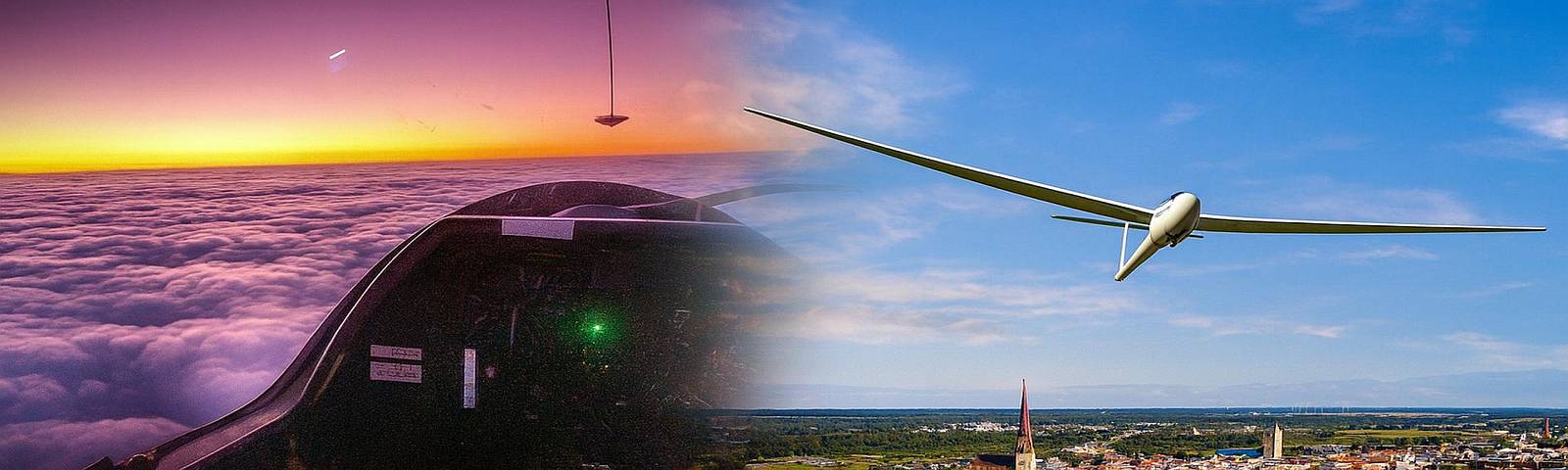
Gliding is the motorless flight with sailplanes, which gain their altitude mainly by upwinds (thermic, slope upwind, wave upwind). The take-off is usually by winch or aircraft tow.
What license do I need for gliding?
In Europe, the Sailplane Pilot Licence (SPL) is usually purchased according to the EASA standard. It entitles to operate sailplanes and, depending on the entry, powered sailplanes.
At what age can I start gliding training?
In Germany, you can usually start with the training from about 14 years. The first solo flight is possible at the earliest at the age of 16, the license is usually obtained from 16 years after passing the exam.
What are the medical requirements?
A medical certificate (mostly LAPL Medical) is required for the gliding licence. A pilot examines, among other things, vision, cardiovascular system and general health.
How long does the gliding training take?
The duration is individual and depends on time, weather and flight frequency. Typical are about one to two years, if you participate regularly in the flight operation.
How is education divided into theory and practice?
The training consists of theory lessons (e.g. Air law, meteorology, navigation, aircraft science, human performance) and practical flight training from first take-off to solo and en route flights.
What types of launches are used in gliding?
The winch start and the aircraft tow are common. In some clubs and schools there are also self-starters (gliders with their own extendable engine) or rare rubber cable launches on slopes.
What is a typical training day in gliding?
A training day usually begins with the joint upgrade of the aircraft, a flight briefing and the division of the flight students. This is followed by successive training flights with flight instructor, breaks, debriefings and – depending on the learning progress – solo flights.
How many starts do I need until the first solo flight?
The number of starts is individually different. Often it is in the range of 40-80 take-offs with flight instructor until the student is safely commanded on laps, take-offs, landings and emergency procedures and released for solo flight.
What do you learn in practical gliding training?
In practice, you learn, among other things:
– Straight ahead and cornering
Take-offs and landings
– Circuits
Use thermal flies and other winds
Emergency procedures and preparation for landing
– Basics of navigation and route flights.
What is the content of theory lessons in gliding?
Typical theory subjects are:
– Air Law
General aircraft knowledge
- Meteorology
– Navigation
- Operational procedures
Human performance
– Basics of communication/funk.
Is there a theoretical exam?
Yes. At the end of the theoretical training, a theoretical examination with questions from all relevant subjects shall be taken by the competent authority. It is usually done in multiple-choice format.
What is the practical gliding test?
The skill test shall consist of an examination flight with an examiner. The audits shall include, inter alia:
Take-off and landing operations
– Circuits
– Curves, climbs and descents
Emergency procedure
– Thermal or en route portions (as required).
Is gliding safe?
Gliding is subject to strict safety standards, clear procedures and regular technical inspections of aircraft. Careful training, continuous training and compliance with all regulations make a significant contribution to safety.
Do I need special physical fitness?
You basically have to be healthy and resilient, but not a competitive athlete. Medical fitness, psychological stability, concentration and a responsible attitude are crucial.
How much does a gliding training cost approximately?
Costs vary depending on flight school or club, number of take-offs, type of take-off (winds or towing) and duration of training. Many gliding clubs work voluntarily and can offer relatively cheap training routes. Concrete prices are mentioned by the respective flight school or club.
How is gliding different from powered flight?
Gliders do not have a constantly running engine, use upwinds and glide. Powered aircraft fly with motor drive and are independent of thermals. The training, costs, licenses and application possibilities differ accordingly.
Is it possible to travel long distances on a gliding?
Yes. Experienced pilots fly routes of several hundred kilometers in good weather conditions. For this purpose, thermals, slope and wave winds are used tactically and carefully planned.
Is sail flying also possible as a hobby in addition to the profession?
Yes. Many gliding pilots practice the sport in their free time – on weekends or on holiday. The training and education can usually be reconciled well with school, studies or work if some time is planned for flight operations and theory.
What role does the weather play in gliding?
The weather is central: thermals, cloudiness, wind, visibility and air masses determine whether and how well flown can be. Pilots learn to assess weather reports, forecasts and development over the course of the day.
Can I try gliding before starting an apprenticeship?
Many flight schools and clubs offer trial flights or trial courses. You can collect first impressions, get to know the flight operations and check whether gliding could become your own hobby.
How often should I fly during training?
The more regular, the better. Those who participate in flight operations as often as possible during the season make progress faster and consolidate what they have learned. Longer breaks usually slow down the learning process.
What equipment do I need as a flight student?
At the beginning, comfortable, matched clothing, firm footwear, sunglasses and possibly a cap are usually enough. Later, own headset, gloves and individual equipment make sense. The aircraft constitutes the flight school or the club.
Is it also possible to do gliding training in winter?
In winter, mainly theory lessons take place. Practical flying is weather and space dependent, but also possible in winter under suitable conditions. However, the most active gliding months are usually spring to autumn.
Are there different sailplanes for training and en route flight?
Yes. In the training, rugged, good-natured double-seaters and single glider pilots are usually used. For performance and en route flight, modern high-performance sailplanes with better glide performance are often used.
Can I purchase further ratings after the gliding license?
Yes. Depending on the flight school and personal interest, e.g. the following extensions are possible:
- Aeronautical rating
– en route and competitive aviation
– Starting type authorizations (e.g. F tow, winch
– Powered sailor or TMG (Touring Motor Glider) privileges.
What happens after passing the exam – am I “finished”?
With the license, the basic training is completed. But flying is a lifelong learning: experience, further training, safety training, route flight and weather experience continuously expand your own skills.
Can I learn to sail with fear of flying?
Slight insecurities or respect for flying are normal and settle for many through experience and trust to the flight instructor. If there is a pronounced fear of flying, the topic should be discussed openly with flight instructor, doctor or, if necessary, a therapist.
Where can I find gliding schools and clubs in Germany?
In Germany there are numerous flight schools and gliding clubs. On information pages such as Pilotenausbildung1.de different providers can be researched and compared. The specific training is then carried out directly at the selected flight school or club.
Does Pilotenausbildung1.de itself offer gliding training?
No. Pilotenausbildung1.de provides neutral information about pilot training and lists flight schools and clubs in Germany. The actual training takes place exclusively at the respective providers.