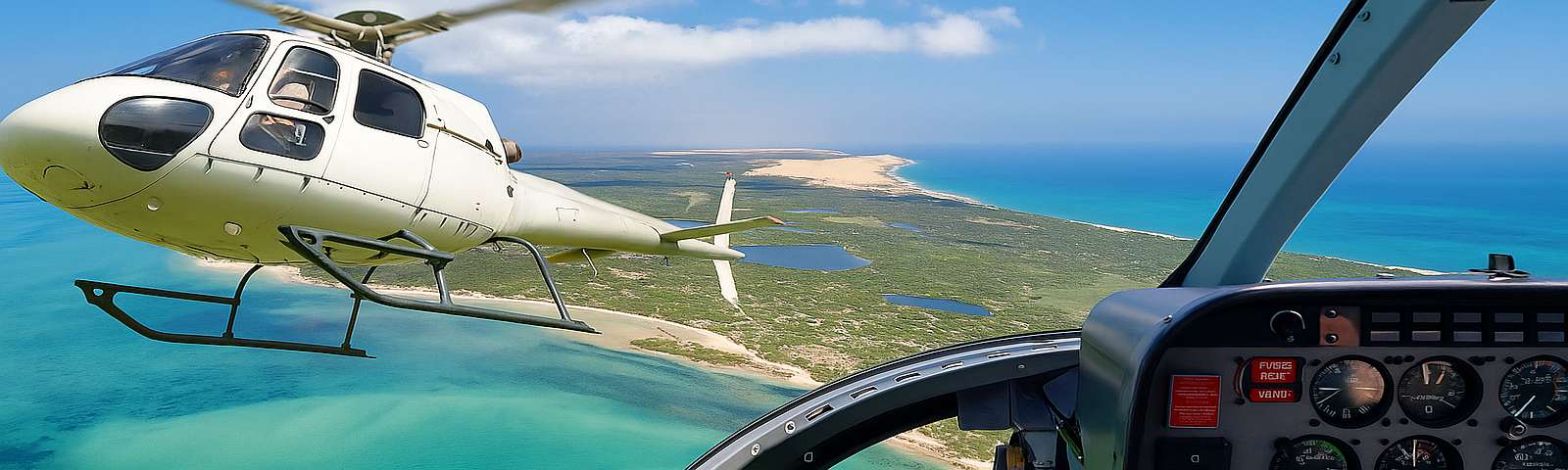
LAPL(H) – Entry into helicopter aviation
The Light Aircraft Pilot Licence for Helicopters (LAPL(H)) offers amateur pilots the opportunity to enjoy the fascinating experience of helicopter flying on a comparatively simple and inexpensive basis. This license is aimed at flight enthusiasts who do not want to take a professional path, but want to discover flying as a leisure activity.
Despite the lower requirements compared to a commercial license, the LAPL(H) still teaches all essential skills to safely and responsibly fly a helicopter. It is particularly attractive that the training is modular and can be individually adapted to the needs of student pilots.
With the LAPL(H), you not only gain in-depth knowledge of aerodynamics, weather science and navigation, but also experience the unparalleled feeling of putting your own flight maneuvers into action. In addition, the license opens up the possibility to fly Europe-wide and thus discover new regions from the air.
Close contact with experienced flight instructors and practical training also promote a deep understanding of technology and safety. This creates a balanced mix of theory and practical experience, which makes the entry into the world of helicopters particularly accessible.
Recommended book*
| Aspects | Description |
|---|---|
| Type of licence | Recreational helicopter pilot license (EASA) for light helicopters up to 2,000 kg and up to 3 passengers (non-commercial). |
| Training objective | Safe, private flying of light helicopters – ideal as an entry point without professional ambitions. |
| Minimum age | 16 years for solo flights, 17 years for licences. |
| Flight hours | At least 40 flight hours, including at least 30 hours with flight instructor and 10 hours solo (including at least 5 hours overland). |
| Theoretical training | Aviation law, navigation, meteorology, helicopter engineering, communications/radio, flight performance & Planning, Human Factors. |
| Medical | LAPL-Medical (less strict than Class 2/1); regular aero-medical examination required. |
| Duration | Typically 4–8 months part-time; depending on weather, availability and flight school. |
| Cost (approximately) | Approximately €15,000–25,000, depending on location, helicopter type (e.g. R22, Cabri G2 and school. |
| Rights | Flight as pilot-in-command (PIC) in the EASA area with up to 3 passengers; no commercial use. |
| Extensions | Upgrading to PPL(H) or later CPL(H) possible; night flight (NVFR) and type ratings supplementable. |
| Coverage | Europe-wide (EASA); not ICAO compliant – may not be usable outside Europe. |
| Typical helicopters | Robinson R22, Guimbal Cabri G2, Enstrom 280 – lightweight training helicopters. |
| Suitable for | Beginners and leisure pilots who want to fly helicopters privately and flexibly – with an option on later promotion routes. |
Comparison LAPL(H) vs. PPL(H)
| Criterion | LAPL(H) | PPL(H) |
|---|---|---|
| Minimum age | 18 years | 17 years |
| Minimum flying hours | 40 hours | 45 hours |
| Rights | Private flights within EASA | Internationally usable, more permissions |
| Aeroplane Weight | up to 2,000 kg MTOW | Larger and more complex patterns possible |
| Commercial use | Not allowed | with CPL(H) extension possible |
| Medical fitness | LAPL Medical | Class 2 Medical |