LAPL(A) – Costs of training
The LAPL(A) is the entry license for private pilots who want to fly single-engine aircraft with a maximum of four seats up to 2,000 kg. It is less extensive than the PPL(A) and therefore usually cheaper and faster to purchase. In Germany, the average total cost is realistically between 6,500 – 10,000 €.
The training includes both theoretical instruction and practical flying lessons and is particularly aimed at recreational pilots.
With the LAPL(A) flights within Europe are possible, but there are certain restrictions on night flight, instrument flight and commercial use. For many flight enthusiasts, however, it is an attractive and practical introduction to general aviation.
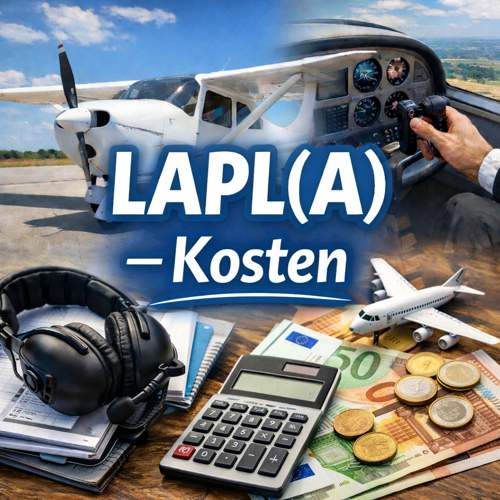
Typical costs for the LAPL(A) in Germany
| Cost point | Description | Typical cost range |
|---|---|---|
| Theoretical training | Presence or online training (at least 100 hours recommended) | 600 – 1.200 € |
| Theoretical examination fees | Fees of the Land Aviation Authority | 150 – 250 € |
| Flight hours (minimum 30 hours) | Aircraft, fuel, flight instructor; often 30-40 hours realistic | 4.500 – 7.500 € |
| Flight instructor fee | If not included in the fare | 30 – 60 €/h. |
| Landing fees | Depending on the airport | 150 – 400 € |
| Examination flight/examination fees | Practical examination incl. Examiners & Aircraft | 300 – 600 € |
| Class 2 medical certificate | Medical examination by aero-medical doctor | 150 – 250 € |
| Teaching materials | Books, navigation materials, maps, apps | 100 – 300 € |
| Headset (optional) | Personal radio headset for training | 150 – 900 € |
| License exhibition | Competent Authority fee | 50 – 150 € |
Why Costs Vary
The price differences between flight schools result mainly from:
-
Aircraft hourly rates (year of construction, consumption, maintenance)
-
Integration of flight instructor fees
-
Airport costs (landing fees, hangar)
-
Used teaching materials (digital vs. printed)
-
Individual pace of learning (some require more than 30 flight hours)
-
Regional differences (urban airfields usually more expensive)